
A review of the 2MP, 5MP and 8MP coaxial HD tiers and their frame-rate trade-offs, plus two ways to handle existing coaxial lines in retrofits and what to verify.
Resolution Tiers and Frame-Rate Trade-Offs
The common pixel tiers on coaxial HD lines are 2MP, 5MP and 8MP. 2MP models usually output 1920x1080 on photosensors such as the SONY IMX307; 5MP models output 2560x1944, mostly on the SONY IMX335; 8MP corresponds to 3840x2160. Once resolution rises, the frame rate one coaxial run can carry falls: by the tester's rated capability, 8MP TVI, AHD and CVI display at 15fps under 3840x2160, while the 2MP tier reaches 25 or 30 frames per second.
A lower frame rate directly changes how the recording host logs footage and how PTZ control feels. A common practice in retrofit projects is to assign resolution by the role of each point: entrances that need clear detail take the high tier, corridors and perimeter stay on tiers with higher frame rates, so one coaxial plant can mix cameras of different pixel counts as long as the backend supports the matching formats.
Line and Connector Parameters to Watch
Changes to coaxial lines concentrate in three places: cable specification, connector workmanship and format settings. As resolution rises, crimp quality affects the picture more visibly: a loose BNC head may cause only slight noise at low resolution but turns into no image or mosaic artifacts at high resolution. The format and frame rate switch through the camera OSD menu, with PAL and NTSC corresponding to 25 and 30 frames; export orders are preset by destination before shipment and one settings page ships with the goods.
The other item is whether control signals travel over coax. Coaxial control differs across models: the 30x30 mm miniature AHD board cameras carry coaxial control, while pinhole models are marked as not supporting it. If the original site sent control over coax, write this item onto the selection confirmation sheet and check it unit by unit before changing models, or the PTZ and menus will stop working and rework means climbing the ladder again.
Two Ways to Keep the Original Wiring
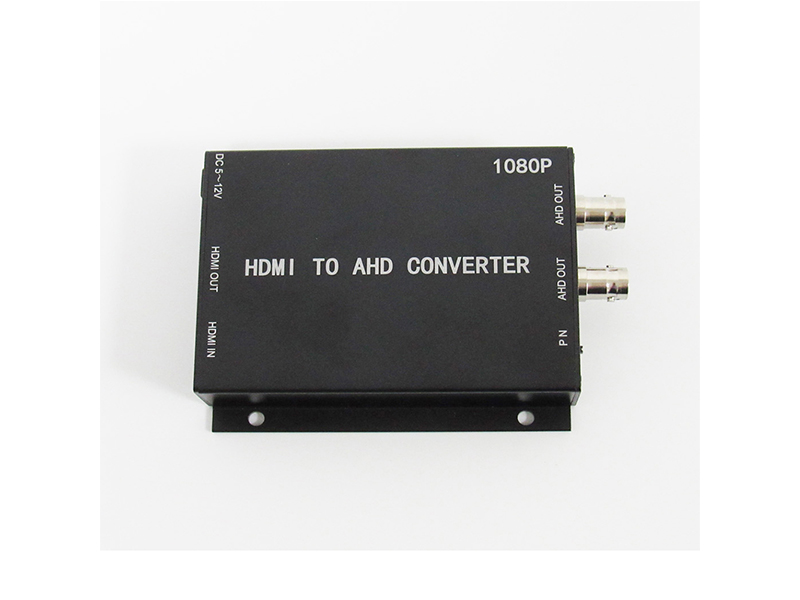
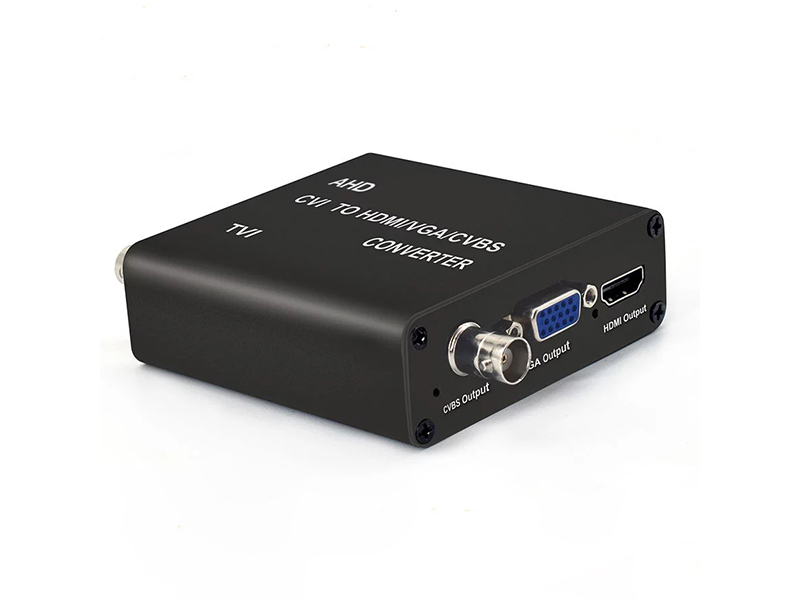
The first way inserts a converter at the display end. The 8MP coaxial HD converter takes one BNC input supporting TVI, AHD and CVI, keeps a coaxial loop-through for the recording host, and adds HDMI, VGA and CVBS, so old monitors in the control room show high-resolution pictures without replacement and the original line stays untouched. The only change happens at the control-room end, with front cameras and cables untouched, which suits projects upgrading in phases.
The second way converts the coaxial signal into a network signal. The 2MP coaxial-HD-to-IP video encoder accepts auto-adaptive AHD, TVI and CVI input, encodes video as H.264 and H.265, outputs over the RJ45 network port with ONVIF and RTSP available, ships with the default address 192.168.1.219, and runs on DC 12V 1A at 1 W of power draw. This suits cases where the front-end line stays and the backend moves to a network recording host.
Compared with the Network Side
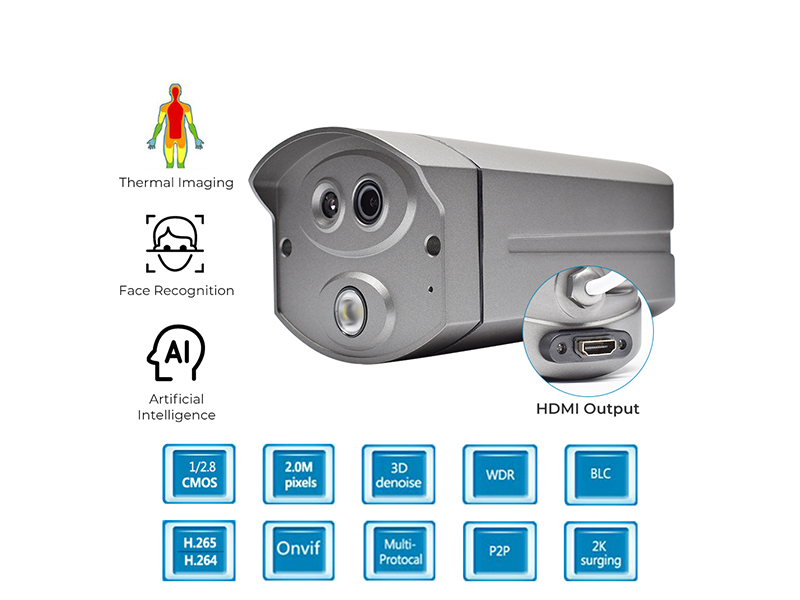
Pixel counts on network cameras rise the same way: the 8MP starlight fixed-focus waterproof bullet and the 8MP 10x motorized zoom model use the 1/2.8 inch SONY IMX415, output 3840x2160 at 20 frames per second, with a 5 to 50mm lens on the zoom version; 12MP models have entered the vandal-proof dome and CS-mount bullet lines. For outdoor and special environments there is also an IP68 starlight explosion-proof network camera at 3MP and 5MP, on the MStar337 plus SONY IMX307 solution.
When one site mixes coaxial and network lines, three things need checking beforehand: which formats the recording host accepts, which interfaces the display end has, and which path the control protocol takes. Confirm those three before choosing a converter, an encoder, or both. Your site conditions can be emailed to info@vctcctv.com, or call +86-755-28146081 and the selection team will propose a plan from existing models.